
AI-Generated Code Security Risks: 45% Had an OWASP Flaw
Veracode found security flaws in 45% of AI-generated code samples. The risks that show up most, and how review and least-privilege setups catch them.
September 18, 2026 · 8 min read
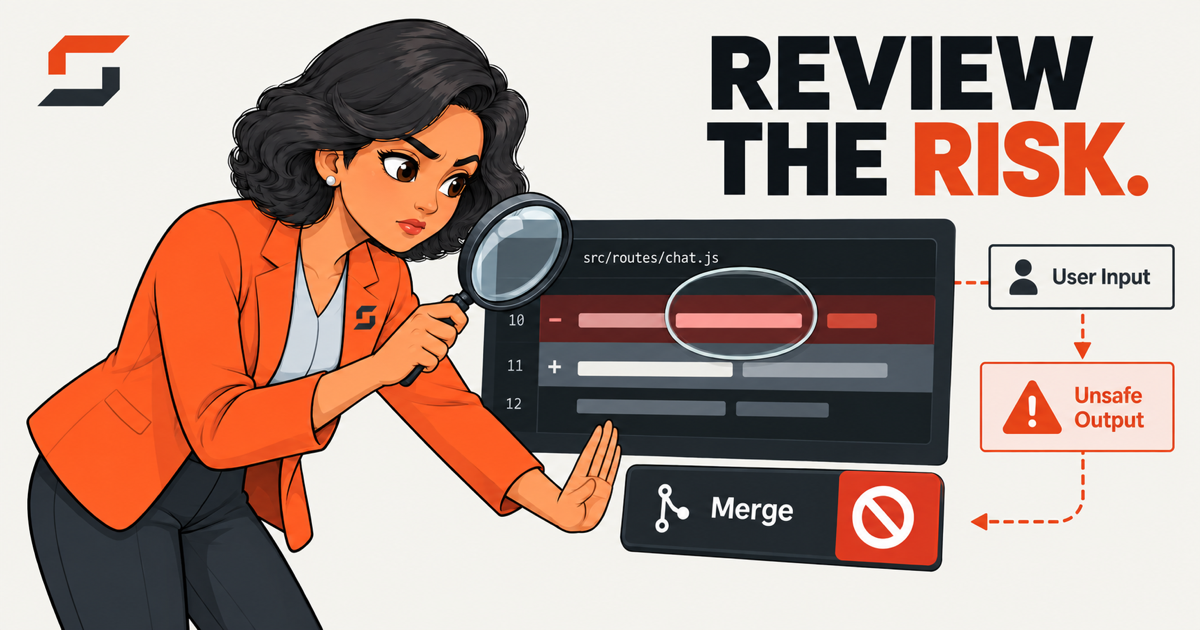
Nearly half of AI-generated code introduces a security flaw, and that number hasn't moved in two years of model improvements. Veracode tested code from over 100 large language models in 2025 and found that 45 percent of samples failed basic security tests and introduced an OWASP Top 10 vulnerability. It re-ran the same test in early 2026, on newer models, and got the same result. If your AI governance plan is "we'll wait for the models to get better at this," the data says stop waiting.
The top risks in AI-generated code
- Cross-site scripting: passed only 15% of the time in Veracode's Spring 2026 run.
- Log injection: passed only 13% of the time in the same run.
- SQL injection and insecure cryptography: better, at 82% and 86% pass rates, but still not safe to skip in review.
- Hardcoded secrets: credentials committed straight into code, which GitGuardian found rising sharply in 2025.
- Unreviewed dependencies: new packages pulled in by the agent that nobody chose deliberately.
Sources: Veracode 2025 GenAI Code Security Report (30 July 2025) and Spring 2026 update; GitGuardian State of Secrets Sprawl 2026. Details and links below.
What the vulnerability data actually shows
The source of the 45 percent figure is Veracode's 2025 GenAI Code Security Report, published July 30, 2025. Veracode had more than 100 LLMs complete 80-plus coding tasks across Java, Python, C#, and JavaScript, then scanned the output for four vulnerability classes mapped to OWASP: SQL injection, cross-site scripting, log injection, and insecure cryptography. Two findings matter more than the topline number. First, the failure rate wasn't evenly spread — Java code failed 72 percent of the time, versus 38–45 percent for Python, C#, and JavaScript. Second, and more damning: scaling up the model didn't help. Veracode's own conclusion was that larger, newer models got better at writing code that runs, with no corresponding improvement in code that's safe.
That second finding held up. Veracode's Spring 2026 GenAI Code Security Update re-ran the study on the current generation of models and found security pass rates "stubbornly stuck at approximately 55 percent" — statistically the same failure rate as a year earlier, even as syntax correctness climbed above 95 percent. The two categories where AI-generated code does worst are also the two most exploitable in a typical web app: cross-site scripting passed only 15 percent of the time (an 85 percent failure rate) and log injection passed just 13 percent of the time (87 percent failure) in the Spring 2026 run — consistent with the 86 percent and 88 percent failure rates Veracode reported for the same two categories in 2025. SQL injection and insecure cryptography fared meaningfully better, at 82 and 86 percent pass rates respectively, which is worth knowing if you're deciding where a review process needs to apply the most scrutiny.
Veracode isn't the only lab to find this. A widely cited Stanford study — "Do Users Write More Insecure Code with AI Assistants?" by Perry, Srivastava, Kumar, and Boneh, presented at ACM CCS 2023 — ran a controlled user study rather than a model benchmark. Developers given access to an AI coding assistant wrote measurably less secure code than developers without one, across the same set of security- relevant programming tasks. The finding that should worry a security lead more than the vulnerability rate itself: the AI-assisted group was more likely to believe their code was secure than the control group. The tool doesn't just introduce flaws — it makes the person shipping them more confident, not less.
Why this keeps happening: review habits break under generation speed
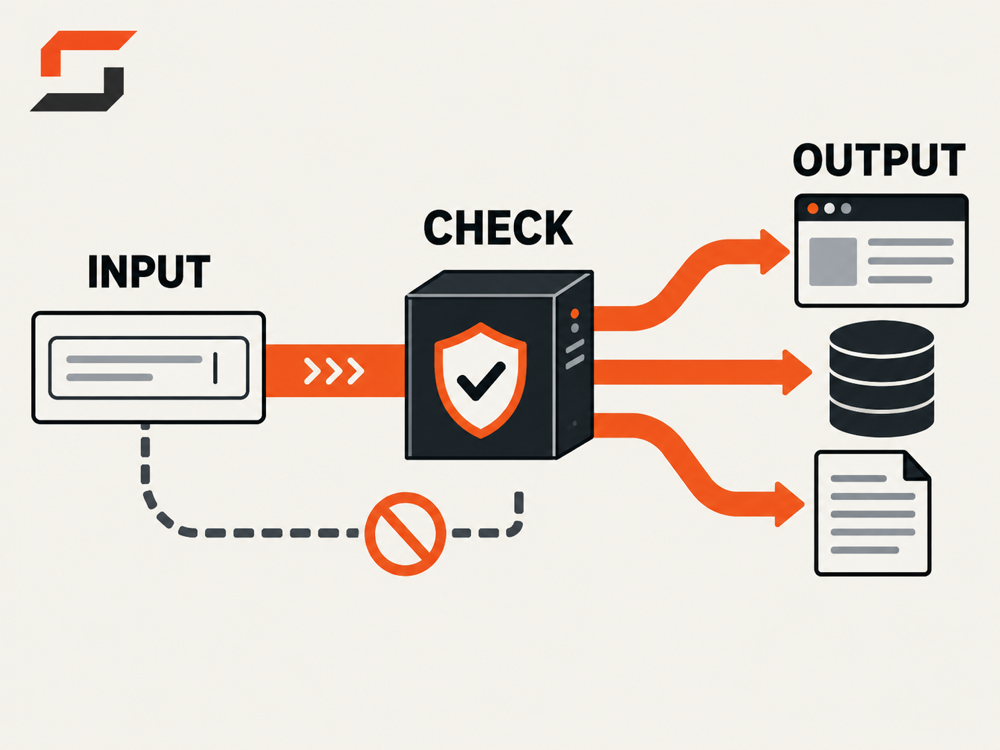
None of this is really a model-quality problem, which is why scaling hasn't fixed it. It's a review problem operating at a new speed. We wrote about the broader version of this in the vibe coding tax — technical debt and code duplication climbing as AI tools make it cheap to generate code and expensive, relatively speaking, to clean it up. Security is the sharper edge of the same failure. A developer reviewing a 15-line function they wrote themselves knows every assumption baked into it. A developer reviewing 150 AI-generated lines in the same five minutes is pattern-matching for "does this look plausible," not verifying that user input gets sanitized before it hits a log statement or a query string.
Cross-site scripting and log injection are exactly the kind of flaw that pattern-matching misses. Both usually require missing a single sanitization or escaping step in an otherwise normal-looking block of code — the output compiles, runs, and passes a quick glance. A reviewer has to specifically ask "where did this input come from, and what happens to it here" for every string that touches a log line or gets rendered back to a browser. That's a slower, more deliberate check than most teams' AI review process asks for, and it's precisely the check the Veracode data says AI output needs most.
Secrets are leaking at the same time, for the same reason
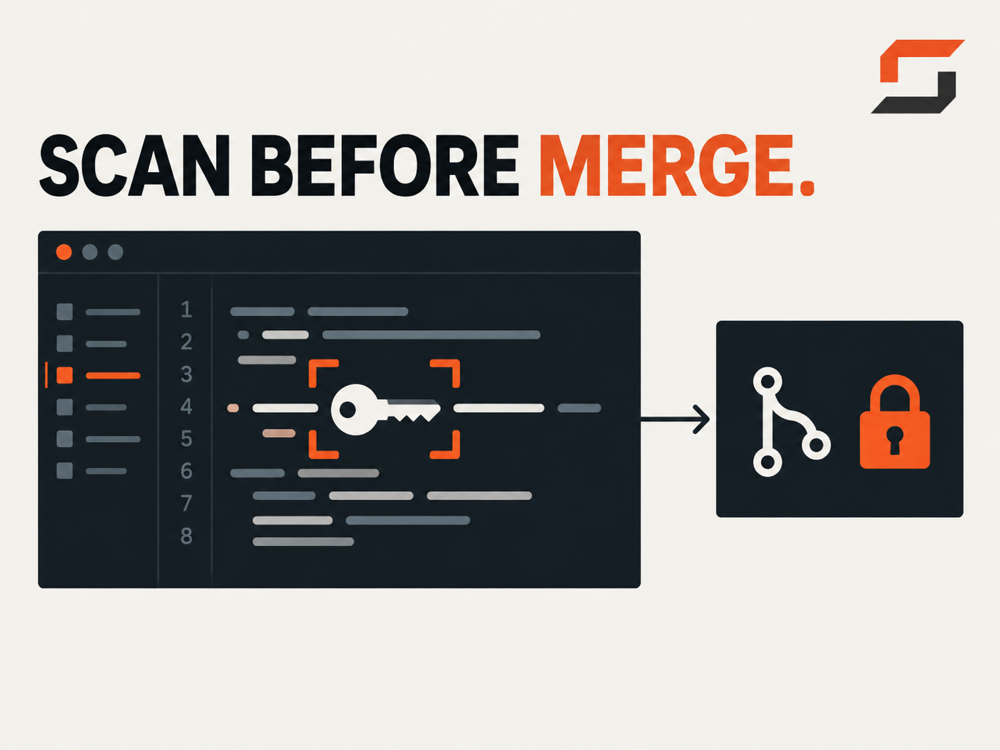
The vulnerability-class data lines up with a second, independent dataset on credential handling. GitGuardian's State of Secrets Sprawl 2026 report, published March 17, 2026, scanned public GitHub activity and found 28.65 million new hardcoded secrets committed in 2025 alone — a 34 percent year-over-year jump and the largest single-year increase the report has recorded in its five editions. Within that, commits associated with Claude Code leaked secrets at a 3.2 percent rate, roughly double the 1.5 percent baseline across all public GitHub commits. Secrets tied specifically to AI services — API keys for AI providers, among them over 113,000 exposed DeepSeek keys — rose 81 percent year over year to more than 1.27 million.
Claude Code-assisted commits leaked secrets at roughly double the rate of the GitHub-wide baseline — 3.2 percent versus 1.5 percent.GitGuardian, State of Secrets Sprawl 2026
Enterprise-scale data backs this up from a different angle. Apiiro analyzed activity across roughly 7,000 developers and 62,000 repositories at Fortune 50 companies between December 2024 and June 2025 and found AI-assisted developers committing code at three to four times the rate of their peers — while monthly security findings in that population rose roughly tenfold over the same six months, from about 1,000 to more than 10,000. The composition of those findings is the part worth sitting with: trivial syntax errors fell 76 percent and logic bugs fell more than 60 percent, but privilege- escalation paths rose 322 percent and architectural design flaws rose 153 percent. AI-assisted developers also exposed cloud credentials and access keys at nearly twice the rate of everyone else, reported The Register and SiliconANGLE, both covering Apiiro's research. Put plainly: AI tools are cleaning up the small, easy-to-spot mistakes and increasing the large, hard-to-spot ones — the exact inversion of what a fast, low- scrutiny review process is built to catch.
What a real review process would need to catch this
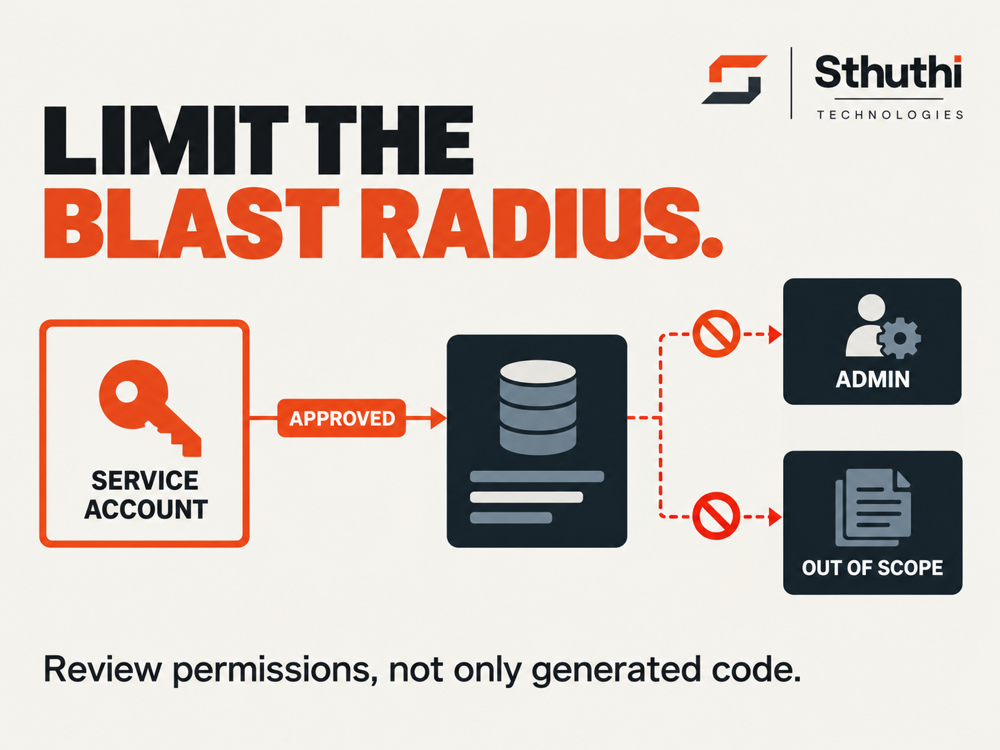
A linter and a pull-request template don't cover this gap, because the failures aren't syntax errors — they're missing judgment calls about data flow, trust boundaries, and secrets handling that a model has no way to know it's supposed to make. A review process built for the actual failure modes in this data needs to check for:
- Input-to-sink tracing — for every user-controlled string, can the reviewer say where it's sanitized before it reaches a log call, a query, or a rendered page? Given that XSS and log injection fail 85–88 percent of the time in benchmark testing, this should be the default question, not a special case.
- Secret-scanning on every AI-touched commit, treated as more likely to contain a hardcoded credential than a human-authored one, not less — the GitGuardian data says the opposite assumption is the one that's currently costing companies.
- Architecture and privilege review for anything AI-scaffolded end-to-end — the Apiiro data shows the growth is in design-level flaws and privilege-escalation paths, not typos. Those don't show up in a diff-by-diff read; they show up when someone asks whether the new service account, the new endpoint, or the new role actually needs the access it was just given.
- Language- and category-weighted scrutiny — a Java service or anything writing to logs or rendering user input deserves more review time than a Python data script, because the failure rates aren't uniform across languages or vulnerability classes.
- No credit for confidence — per the Stanford/CCS finding, the person who says the code is fine is not more likely to be right because they used an AI assistant. If anything, that study found the opposite correlation.
None of this is exotic. It's a normal, security-conscious code review — but calibrated for a source that fails silently and confidently, at a volume no team was reviewing at eighteen months ago.
The actual test: can this person catch it, not just prompt for it
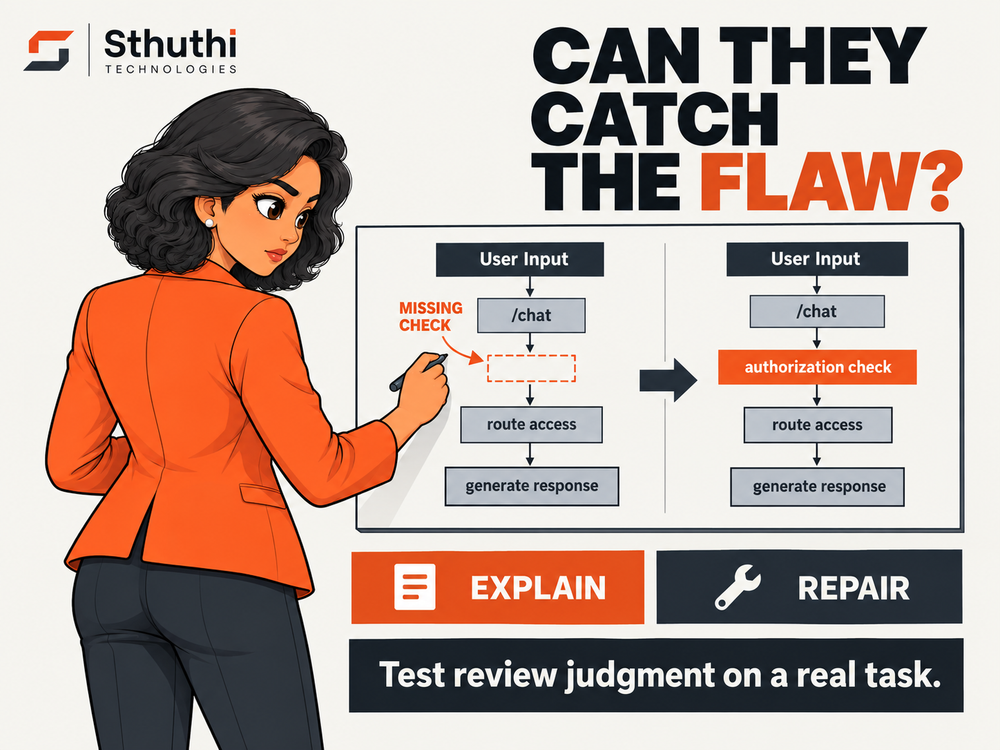
Here's the governance question this data actually raises, and it's not "which AI tool is safest" — none of the vendors in Veracode's test set were meaningfully better once you controlled for task and language. The question is whether the people reviewing AI output on your team would catch an unescaped log statement or a scope-creeping permission change before it merges. A seat license and a completed onboarding video don't answer that. Neither does a self-assessment — the Stanford study is direct evidence that developers using AI assistants are worse than usual at judging their own code's security, not better.
The only way to actually know is to test it: put someone in front of a real AI-authored diff, with a real vulnerability class planted in it — an unsanitized log line, a rendered string that should have been escaped, a credential that shouldn't be hardcoded — and watch whether they find it and can explain the fix. That's a different exercise than a multiple-choice quiz about OWASP categories, and it's the difference between a certification that means something to a security team and one that means someone sat through a course.
That's the model behind our certification tracks at Sthuthi: proctored, task-based assessments against real repositories and real diffs, not question banks. If your review bar for AI-generated code is higher than what a general Claude Code, Copilot, or Cursor track covers — a compliance requirement, a specific internal framework, a security posture you need engineers certified against directly — that's exactly what a custom certification track is for. Otherwise, get in touch and we'll help you figure out which track actually matches the risk you're trying to close.
For a Claude Code-specific route, the Claude Code certification track assesses diff review and permissions on a live repository task.
For a practical review routine, see our Claude Code review checklist.
Want your team's AI-tool usage actually checked?
See the published certification tracks, or tell us about the tool you're worried about.