
Claude Code vs GitHub Copilot: Agent or Pair Programmer?
Claude Code drives whole tasks; GitHub Copilot pairs inside your editor. Which fits your team's workflow, review process and budget, and can they coexist?
October 9, 2026 · 8 min read

Claude Code and GitHub Copilot are often compared as rivals, but they started from different jobs. GitHub Copilot began as a pair programmer: suggestions and chat while an engineer types. Claude Code began as an agent: you describe a task, it plans and makes the change, and you review the result. Both have grown towards the middle, and GitHub now lets teams run Claude as an agent inside GitHub. So the useful question for a team isn't which one wins, but which job you need done and how the two fit together.
Claude Code vs GitHub Copilot at a glance
| GitHub Copilot | Claude Code | |
|---|---|---|
| Started as | A pair programmer: suggestions and chat inside the editor | An agent: hand it a task, review the result |
| Where it runs | Your IDE, GitHub.com and a cloud agent in an ephemeral environment | Terminal, VS Code, JetBrains, a desktop app, the web and CI |
| Agent work | Agent mode in the IDE; a cloud agent that opens pull requests | Multi-file tasks locally, in the cloud, in CI or on a schedule |
| Models | A choice of premium models, set by plan and policy | Anthropic's Claude models |
| Repositories | The cloud agent works only on GitHub-hosted repositories | Any Git repository it can reach |
| Team plan list price | $19 per seat per month (Business), $39 (Enterprise) | $20 per standard seat per month billed annually (Claude Team) |
From GitHub's and Anthropic's documentation and pricing pages, checked 9 October 2026.
Agent vs pair programmer: what's the difference?
A pair programmer works at the speed of the person typing. It suggests the next lines, answers questions about the code in front of you, and leaves every decision with the engineer. The risk is small and spread out: lots of small suggestions, each accepted or rejected in the moment.
An agent works on a whole task. It reads the codebase, edits several files, runs tests and comes back with a diff. The risk is concentrated: one larger change that someone has to review properly. That changes what your team needs to be good at, from judging suggestions to scoping tasks and reviewing diffs.
Both tools now do some of each. GitHub's plan documentation lists agent mode and a cloud agent on Copilot Business and Enterprise. The cloud agent researches a repository, plans and implements changes in an ephemeral cloud environment, and can be started from an issue or pull request. Claude Code, for its part, runs inside VS Code and JetBrains as well as the terminal. But the centre of gravity is still different, and that's what your team will feel day to day.

Better together: Claude inside GitHub
According to GitHub's third-party agents documentation, Copilot Business and Enterprise organisations can enable Anthropic's Claude and OpenAI's Codex as coding agents on GitHub. The feature is in public preview. An engineer assigns an issue to the agent or mentions it on a pull request, the agent opens a pull request, and the team reviews it like any other. GitHub says the generated code is scanned with CodeQL, secret scanning and dependency checks, and the agents use Actions minutes and Copilot's AI credits.
That gives teams a practical middle path: keep Copilot as the everyday assistant in the editor, and use Claude, either through GitHub or through Claude Code directly, for larger tasks that end in a pull request.
Which fits your team's workflow?
- Choose GitHub Copilot as the standard if your code lives on GitHub, most engineers want help while they type, and you want one vendor for repositories, CI and AI with policies managed in one place.
- Choose Claude Code as the standard if you want to hand off whole tasks, run agents in CI or on a schedule, work across several IDEs and the terminal, or your repositories aren't all on GitHub.
- Use both if you want inline help for everyone and agent work for some. It's a common pattern, as long as both feed into the same review process.
What changes for your review process
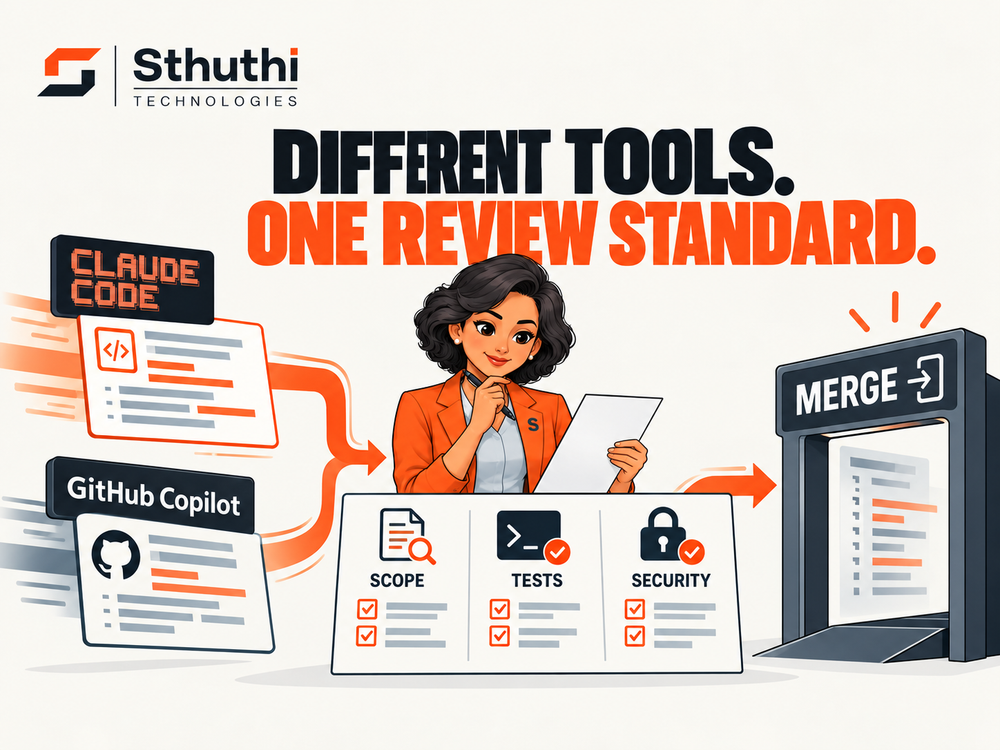
Copilot's inline suggestions are reviewed by the engineer who accepts them, in the moment. Agent work, from either tool, arrives as a diff for someone else to review. If you adopt agents, your review standard has to cover scope creep, new dependencies, weakened tests and permission changes, because those are the ways a plausible-looking agent diff goes wrong. Our review checklist for agent-written code covers both.
Cost for a team
| Plan | List price, checked 9 October 2026 |
|---|---|
| GitHub Copilot Business | $19 per seat per month, including 1,900 GitHub AI Credits per user |
| GitHub Copilot Enterprise | $39 per seat per month, including 3,900 GitHub AI Credits per user |
| Claude Team, standard seat | $20 per month billed annually, or $25 monthly |
| Claude Team, premium seat (5x standard usage) | $100 per month billed annually, or $125 monthly |
| Claude Enterprise | $20 per seat per month billed annually, plus usage at API rates |
Sources: GitHub Copilot plans and Claude pricing. Copilot Enterprise is designed for GitHub Enterprise Cloud, and GitHub notes Copilot isn't currently available for GitHub Enterprise Server. Heavy agent use is metered on both sides, so judge cost after a pilot, not from list prices.
Should we switch from Copilot to Claude Code?
Usually not as a first step. If Copilot is already rolled out, add agent work alongside it for a pilot group, measure what ships and what breaks, and then decide. Switching everyone at once throws away the habits your team has already built and makes it hard to tell what changed. Our 90-day Claude Code rollout playbook walks through a pilot like this.
Certify the skill, not the subscription
Whichever you standardise on, a licence doesn't tell you who uses it well. We run GitHub Copilot training for teams, where engineers justify real calls on Copilot's suggestions, and a Claude Code certification track ending in a proctored task in a live repository. Comparing Cursor and Codex too? See Claude Code vs Codex vs Cursor for teams.
Sources: GitHub Copilot plans; About Copilot cloud agent; About third-party agents; Claude Code overview; Claude pricing. Checked 9 October 2026.
Frequently asked questions
Is Claude Code better than GitHub Copilot?
They started from different jobs. GitHub Copilot began as a pair programmer that helps while an engineer types; Claude Code began as an agent that takes on whole tasks. The better choice depends on whether your team needs inline help, task hand-offs, or both.
Can I use Claude in GitHub Copilot?
Yes. GitHub's documentation says Copilot Business and Enterprise organisations can enable Anthropic's Claude as a third-party coding agent on GitHub. The feature was in public preview as of October 2026.
Which is cheaper for a team?
At list price on 9 October 2026, GitHub Copilot Business was $19 per seat per month and a Claude Team standard seat was $20 per month billed annually. Both meter heavy agent use, so compare cost after a pilot.
What's the difference between an agent and autocomplete?
Autocomplete and chat suggest code while the engineer types, and the engineer decides each time. An agent works on a whole task across several files and returns a diff, which someone then has to review properly.
Should we switch from Copilot to Claude Code?
Usually not as a first step. Add agent work alongside Copilot for a pilot group, measure what ships and what breaks, then decide.
Want your team's AI-tool usage actually checked?
See the published certification tracks, or tell us about the tool you're worried about.