
Claude Code vs Codex vs Cursor: Pick One for Your Team
Three coding agents, one standard. Compare Claude Code, OpenAI Codex and Cursor on workflow fit, model strategy and governance before you buy seats.
October 6, 2026 · 8 min read
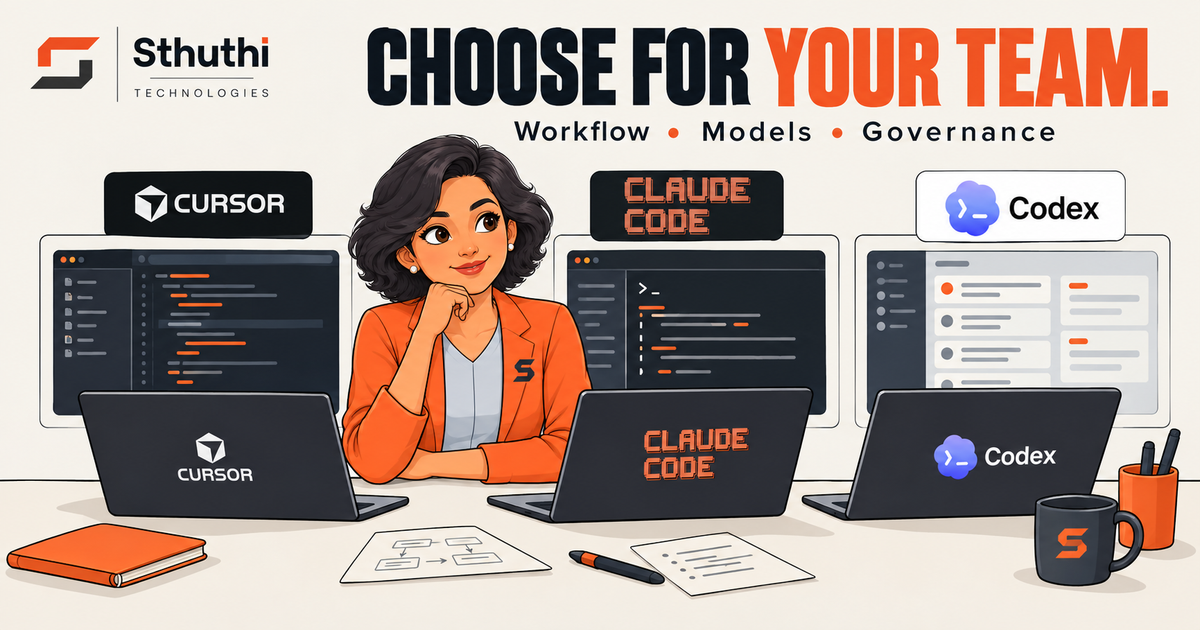
Cursor, Claude Code and Codex can all plan and make multi-file changes across a codebase, so the choice for a team is less about raw ability and more about where your engineers work, which models you want, and how you'll govern the tool. Cursor is an AI code editor that works with models from several providers. Claude Code is Anthropic's agentic tool, usable from the terminal, IDEs, a desktop app and the web. Codex is OpenAI's agent across ChatGPT, a CLI, an IDE extension and the cloud. Many teams use more than one.
Cursor vs Claude Code vs Codex at a glance
| Cursor | Claude Code | Codex | |
|---|---|---|---|
| What it is | An AI code editor and coding agent | An agentic coding tool from Anthropic | OpenAI's coding agent |
| Where it runs | The Cursor editor, plus a CLI and cloud agents | Terminal, VS Code and JetBrains, a desktop app and the web | The ChatGPT desktop app, a CLI, an IDE extension and Codex Cloud |
| Models | Models from several providers, including Anthropic, OpenAI and Google | Anthropic's Claude models | OpenAI's models |
| Project instructions | Rules | CLAUDE.md (and it can read AGENTS.md) | AGENTS.md |
| Extending it | Plugins, skills, MCP and rules | MCP, skills, hooks, plugins and subagents | Subagents, rules and config files |
| Undo and isolation | Local checkpoints, separate from Git | Checkpoints for Claude's own file edits | Git worktrees for local work |
| Team controls | Team and enterprise admin settings | Managed settings and OpenTelemetry metrics | Workspace analytics, compliance API and audit events |
Based on each vendor's documentation, checked 6 October 2026. All three change quickly, so confirm the details that matter to you before you decide.
Claude Code
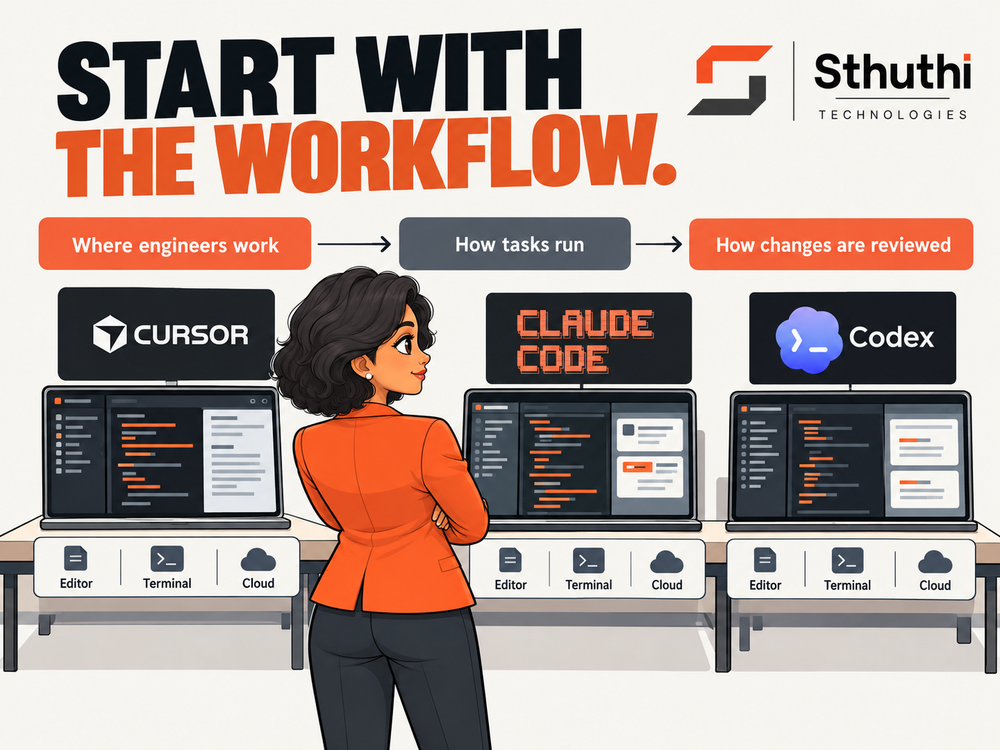
Choose by where your engineers work
Cursor suits teams that live in the editor. Its documentation describes it as a coding agent built into an AI code editor, with plan mode, code review and integrations with GitHub, GitLab, Azure DevOps, Bitbucket, JetBrains, Slack and Linear.
Claude Code suits teams that work across surfaces or automate a lot. According to Anthropic's overview, the same engine runs in the terminal, VS Code, JetBrains, a desktop app and the browser, and it can run in CI through GitHub Actions or GitLab CI/CD. It can also be installed as an extension inside Cursor, so the two aren't mutually exclusive.
Codex suits teams already on ChatGPT. OpenAI's Codex documentation lists the ChatGPT desktop app, a CLI, an IDE extension and Codex Cloud, with work running either on the developer's machine or in a cloud environment, and access through ChatGPT's work plans.
Choose by model strategy
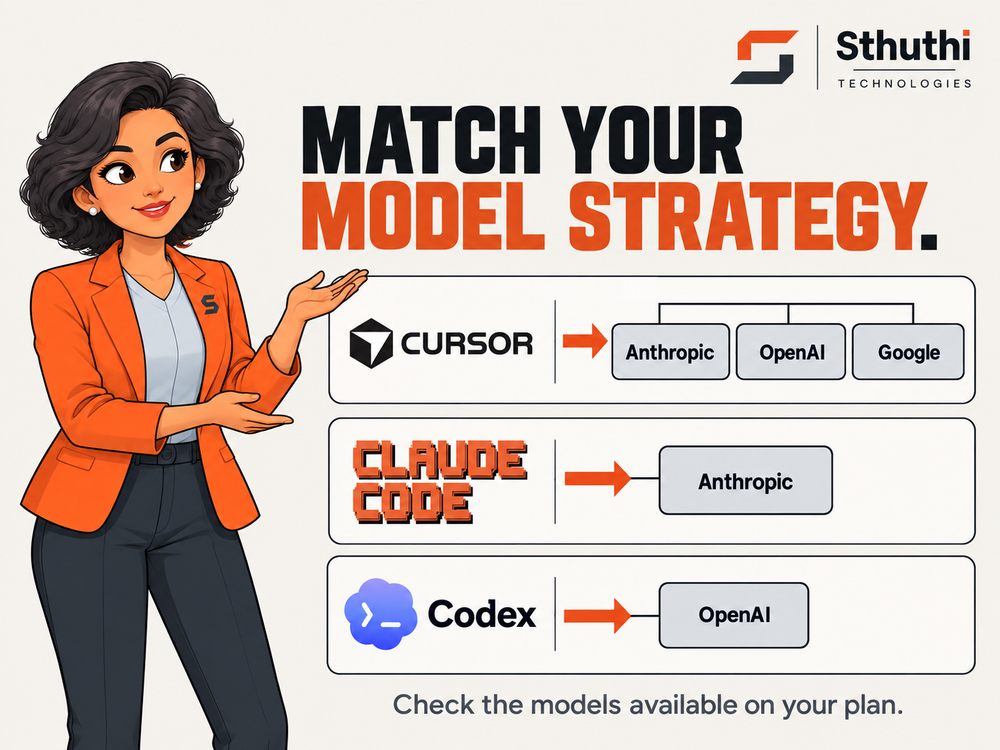
If you want to switch between models from different providers in one place, Cursor is built for that. If you've standardised on Anthropic's models, Claude Code gives you the most direct route. If you've standardised on OpenAI, Codex does the same. A multi-tool setup is common, and that makes the next point important.
Choose by how you'll govern it
For a team, governance often matters more than features. Check how each tool lets you:
- Enforce rules centrally. Claude Code has managed settings that individual users can't override. Cursor and Codex both offer team and enterprise admin controls.
- Control what the agent can run. Claude Code and Codex both document permission and sandboxing controls; check Cursor's equivalent settings for your plan. Agree defaults before rollout, not after an incident.
- See usage and cost. Claude Code exports OpenTelemetry metrics. Codex lists workspace analytics and a compliance API with audit events.
- Undo safely. Cursor's and Claude Code's checkpoints help within a session, but both vendors say to rely on Git for real version control.

Best AI coding assistant for enterprise? Ask 3 questions first
There's no single best tool for every enterprise. Settle these three things first and the shortlist usually picks itself:
- Where does your team work? One editor points to Cursor or GitHub Copilot; the terminal, several IDEs and CI point to Claude Code or Codex.
- Which models do you want? Several providers in one place points to Cursor; a single provider points to that provider's own agent.
- What does governance need on day one? If you need audit logs, SCIM and per-repository controls, price the enterprise tier of whichever tool you choose, and agree permission defaults before rollout.
How to standardise if you use more than one
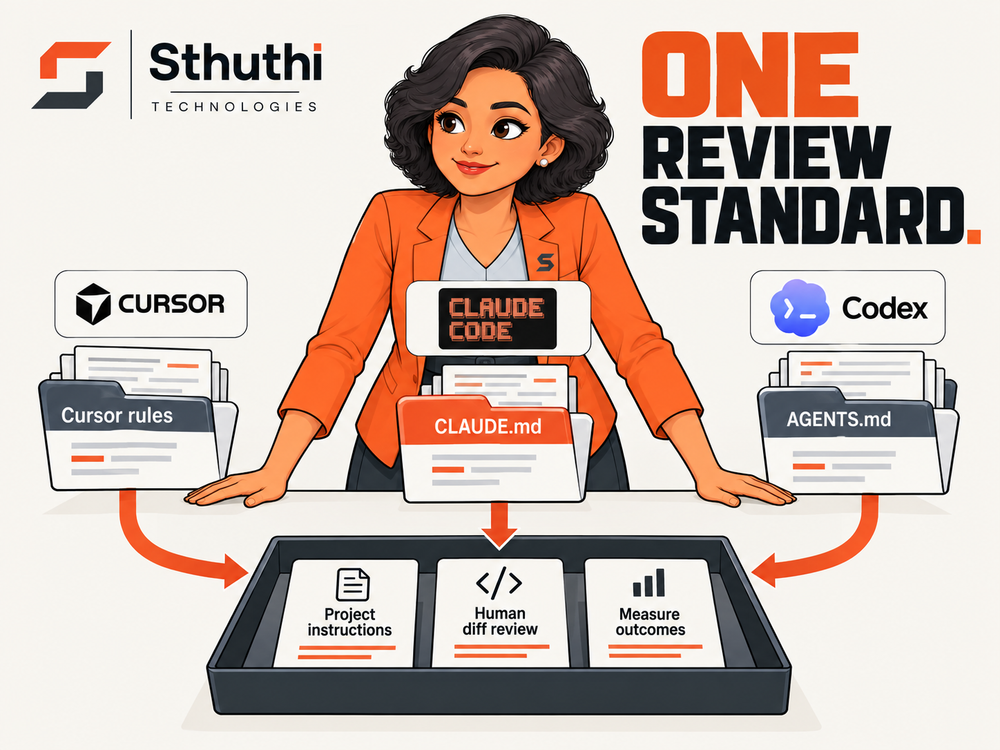
- Share one set of project instructions. Codex uses AGENTS.md, and Anthropic says Claude Code can read an existing AGENTS.md alongside CLAUDE.md, so one file can serve both. Cursor uses its own rules, so keep those in sync.
- Use one review standard for every agent-written diff, whichever tool produced it. Our review checklist works for all three.
- Measure outcomes, not the tool. Compare shipped changes, review time and change failures across teams, as described in how to measure Claude Code impact.
Certify the judgment, whichever tool you pick
The skills that matter are the same across all three: framing a task clearly, reviewing what the agent changed, and knowing when to take over. We run separate tracks for Cursor, Claude Code and Codex, each ending in a proctored task inside the real tool. We're independent of all three vendors. For what each vendor offers itself, see our posts on Cursor, Claude Code and Codex certification.
Sources: Cursor documentation; Cursor Agent overview; Claude Code overview; Claude Code monitoring; Codex documentation. Checked 6 October 2026.
Frequently asked questions
Which is better for teams, Cursor, Claude Code or Codex?
It depends on where your engineers work and which models you want. Cursor is an AI code editor that supports models from several providers, Claude Code is Anthropic's agentic tool across terminal, IDE, desktop and web, and Codex is OpenAI's agent across ChatGPT, a CLI, an IDE extension and the cloud.
Can a team use more than one of them?
Yes. Claude Code can even be installed as an extension inside Cursor. Codex uses AGENTS.md and Claude Code can read AGENTS.md alongside CLAUDE.md, so one instructions file can serve both.
Does Sthuthi certify all three?
Yes. We run separate, independent tracks for Cursor, Claude Code and Codex, each ending in a proctored task inside the real tool.
Want your team's AI-tool usage actually checked?
See the published certification tracks, or tell us about the tool you're worried about.