
Is There a Cursor Certification? No. Here's What Counts
Anysphere doesn't offer an official Cursor certification. What it does offer (tutorials, workshops, an Ambassador program) and how teams prove Cursor skill instead.
September 18, 2026 · 5 min read
Facts checked: 9 October 2026
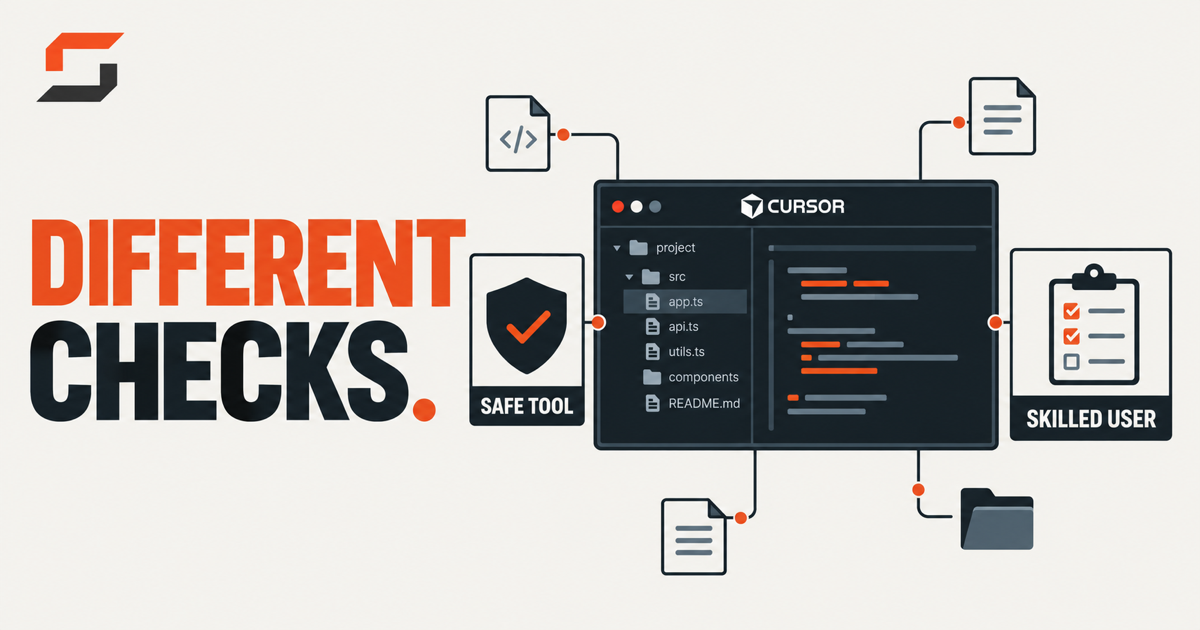
No — there is no official certification for Cursor. Anysphere, the company that makes it, publishes free tutorials and runs occasional workshops, but nothing that proctors a skill, scores a candidate, or issues a verifiable credential. The one real certification Cursor holds, AIUC-1, doesn't certify people at all — it certifies the product.
What Cursor actually offers
Cursor's own site has three things that could be mistaken for a certification program, and none of them are one:
- Cursor Learn — official tutorials on AI foundations, coding with agents, and reviewing generated code. It's genuinely useful, self-paced reading. It ends in nothing: no quiz, no proctor, no credential.
- Cursor Workshops — live and on-demand sessions (30–60 minutes, hosted on Luma and YouTube) aimed at admins, security teams, mobile developers, and other role-specific audiences. Attendance isn't scored, and there's nothing to fail.
- The Ambassador program — a community role for active Cursor users who moderate the forum and run local meetups, with perks like a comped Ultra plan. It's an advocacy program, not an assessment of anyone's ability to use the editor well.
None of the three involves a proctor, a task, or a pass/fail outcome. That puts Cursor closer to "vendor publishes docs" than to "vendor runs an exam" — which, for a three-year-old company, isn't unusual. It's still worth naming plainly if you're deciding how to verify your own team.
AIUC-1 is real. It just isn't about you.
The certification Cursor does hold and talk about is AIUC-1, audited by Schellman — the same firm that was the first ANAB-accredited ISO 42001 certification body. AIUC-1 combines an audit of Anysphere's organizational controls with adversarial testing of the Cursor agent itself, across "several thousand scenarios" covering secrets protection, secure code generation, MCP security, and agent identity and permissions. Cursor has to be retested quarterly and fully re-audited every year to keep it.
That's a legitimate credential, and it says something real: Cursor the product has been independently checked for how it behaves under adversarial pressure. It says nothing about whether the engineer sitting in front of it knows when to trust Composer with a multi-file change versus when to take the keyboard back. AIUC-1 certifies the tool's safety envelope, not a person's judgment inside it — a different question, the same way Anthropic's Claude Certified Developer exam answers a platform-breadth question rather than a this-specific-engineer question.
A company growing faster than anyone is checking competency
The absence of a skills certification is more notable here than it would be for a smaller tool, because Cursor is not a niche product. By Anysphere's own numbers, 64% of Fortune 500 companies use Cursor, more than 50,000 enterprises build with it, and it's used to write over 100 million lines of enterprise code a day. Anysphere's annualized revenue went from roughly $100 million in January 2025 to over $500 million by June 2025, then to a $2.3 billion Series D at a $29.3 billion valuation that November — and in August 2026, Anysphere was acquired outright by SpaceX in an all-stock deal, after SpaceX first invested in April.
That's an extraordinary growth curve for a code editor to ride in under three years, and it's exactly the pattern behind the vibe coding tax: adoption compounding faster than anyone's verifying what people do with it. Tens of thousands of companies rolled Cursor out to their engineering orgs while the only "certification" attached to the product checks Anysphere's security controls, not whether the engineer running Agent mode against your production repo would catch a bad diff before it merges.
What actually needs checking: Composer and Agent mode judgment
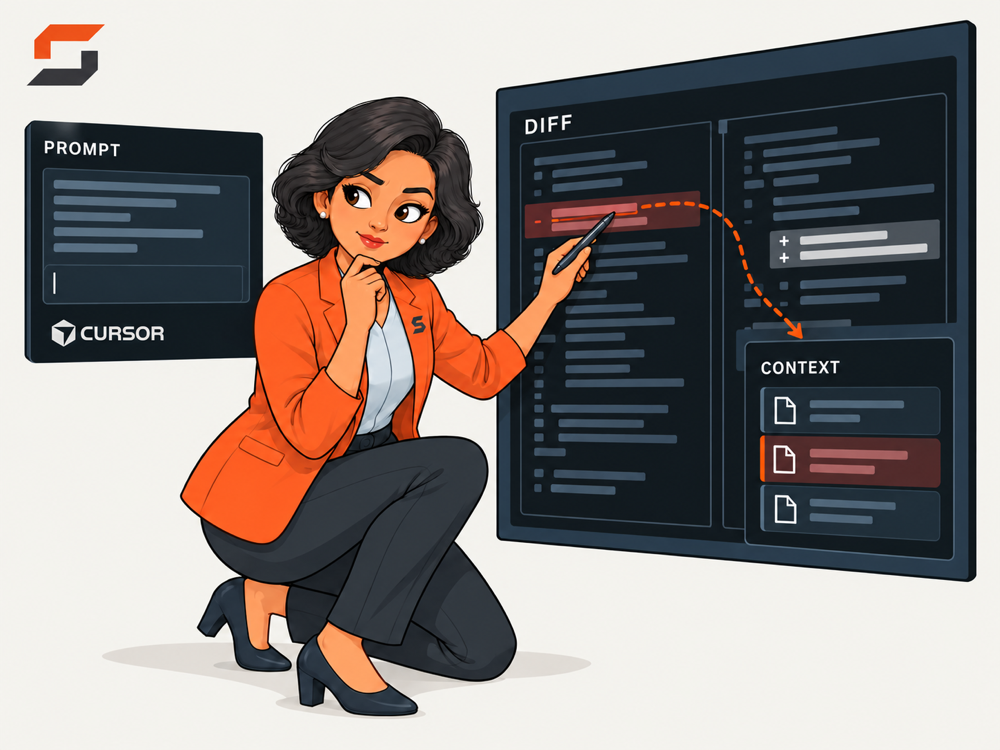
Cursor's failure modes aren't generic "did the AI write bad code" failure modes — they're specific to how much control the editor lets you hand over, and how much context it decides to use without being asked. The judgment calls that separate a team that's good at Cursor from a team that's just logged into it:
- Context selection — knowing what Cursor should index and reference for a given change, and catching it when the editor's default context is wrong for the task at hand.
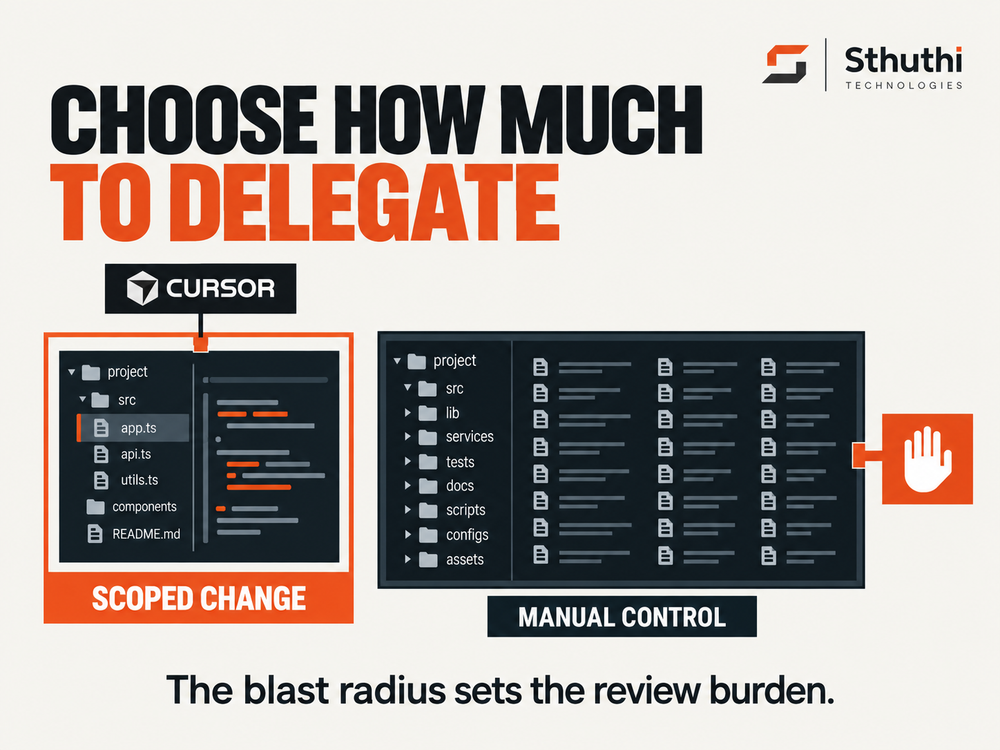
- Composer vs. manual edits — recognizing which changes are safe to hand to Composer end-to-end, across many files, and which need line-by-line control because the blast radius is too large to delegate.
- Reviewing the prompt, not just the diff — a Composer or Agent-mode change is the output of a conversation. Reviewing the result without reading what was asked for misses half of what could have gone wrong.
None of that shows up in a tutorial-completion badge or a workshop attendance record. It shows up when someone is put in front of a real multi-file task in the actual editor and has to explain the calls they made.
What to test for instead
If your team already has Cursor turned on — and given the adoption numbers above, a large share of engineering orgs do — the honest finding here is that nobody is checking whether that rollout produced skill or just usage. That's the gap our Cursor certification track is built for: it covers working in Cursor's Composer and Agent modes across a multi-file change, where the editor's own context choices matter as much as the model's, and it ends in an in-IDE task assessment — a real repository change, reviewed for both the diff and the prompts that produced it — rather than a quiz. It's a similar shape to how we approached GitHub Copilot, adjusted for the fact that Cursor hands engineers much more end-to-end control than a pair-programming suggestion box does. See the full list of published tracks if Cursor isn't the only tool you need checked, or talk to a program lead if what you need is scoped to your own codebase and rollout.
Further reading: Wikipedia's summary of Anysphere's funding history and the SpaceX acquisition and Cursor's own community forum on the Ambassador program's status, if you're weighing the community route against an actual assessment for your team.
Choosing between tools? Read Cursor vs Claude Code vs Codex for teams.
Frequently asked questions
Is there an official Cursor certification for developers?
No. Anysphere (Cursor's maker) offers free tutorials (Cursor Learn), live/on-demand workshops, and a community Ambassador program — none of which are proctored, scored, or issue a verifiable credential.
What is Cursor's AIUC-1 certification, then?
AIUC-1 is a real, independently audited certification — by Schellman — but it certifies Cursor the product's security and reliability controls (secrets protection, MCP security, agent permissions), not the competency of the people using it.
Does finishing Cursor Learn or attending a workshop count as being certified?
No. Cursor Learn is self-paced reading with no quiz or proctor, and workshops are 30-60 minute live or on-demand sessions with no assessment. Neither ends in a credential.
Want your team's AI-tool usage actually checked?
See the published certification tracks, or tell us about the tool you're worried about.