
Claude Certified Developer (CCDV-F): What It Won't Test
The CCDV-F checks Claude API and ecosystem knowledge. It doesn't watch you ship in a repo. Format, domains, cost, and the gap your team should close.
October 6, 2026 · 7 min read
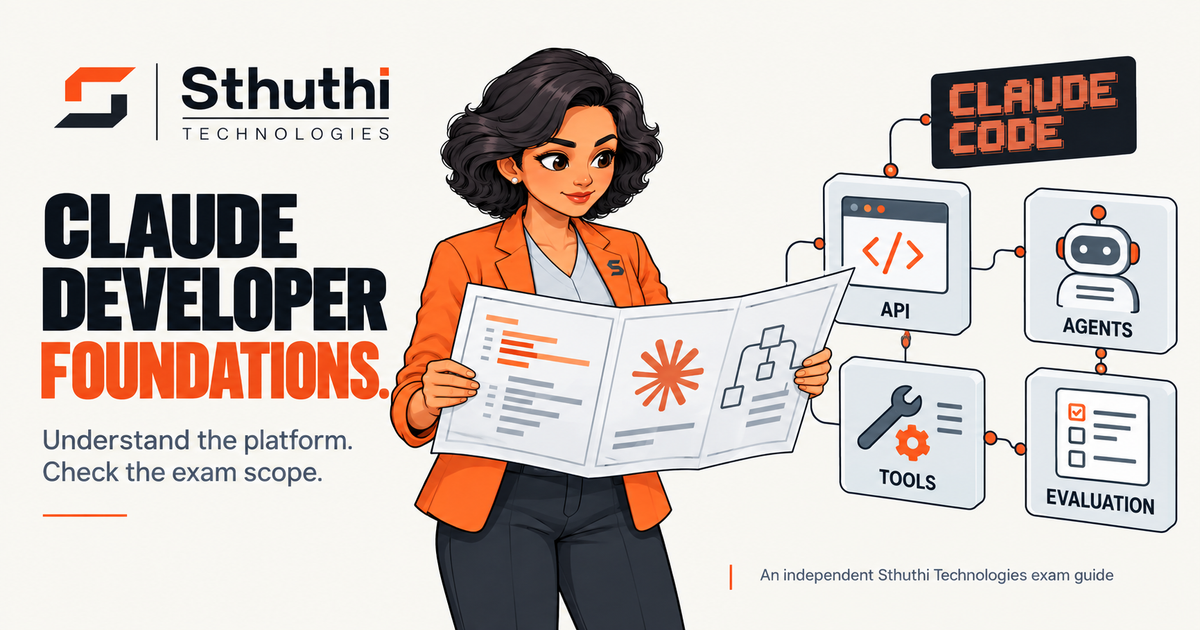
The Claude Certified Developer – Foundations (CCDV-F) is Anthropic's official certification for people who build applications, agents and workflows on the Claude platform. According to Anthropic's exam guide (version 1.0, effective July 2026), it's a 53-item, 120-minute proctored exam that costs $125, needs a scaled score of 720 to pass, and stays valid for 12 months. It's booked through Anthropic's partner channel, and only 3.1% of it is about Claude Code itself.
CCDV-F exam format, domains and cost at a glance
| Exam code | CCDV-F |
|---|---|
| Questions | 53 multiple-choice and multiple-response items |
| Time limit | 120 minutes |
| Delivery | Proctored, online or at a Pearson VUE test centre |
| Passing score | Scaled score of 720 on a 100–1,000 scale |
| Fee | $125 per attempt (partner-tier discounts may apply at checkout) |
| Valid for | 12 months, then a free renewal assessment if renewed on time |
| Who can register | People at organisations in the Claude Partner Network |
Source: Anthropic's CCDV-F exam guide, version 1.0, July 2026, and Pearson VUE's Claude Certification Program page. Check both before you book, because the guide says it can change without notice.
Who can take the Claude Certified Developer exam?
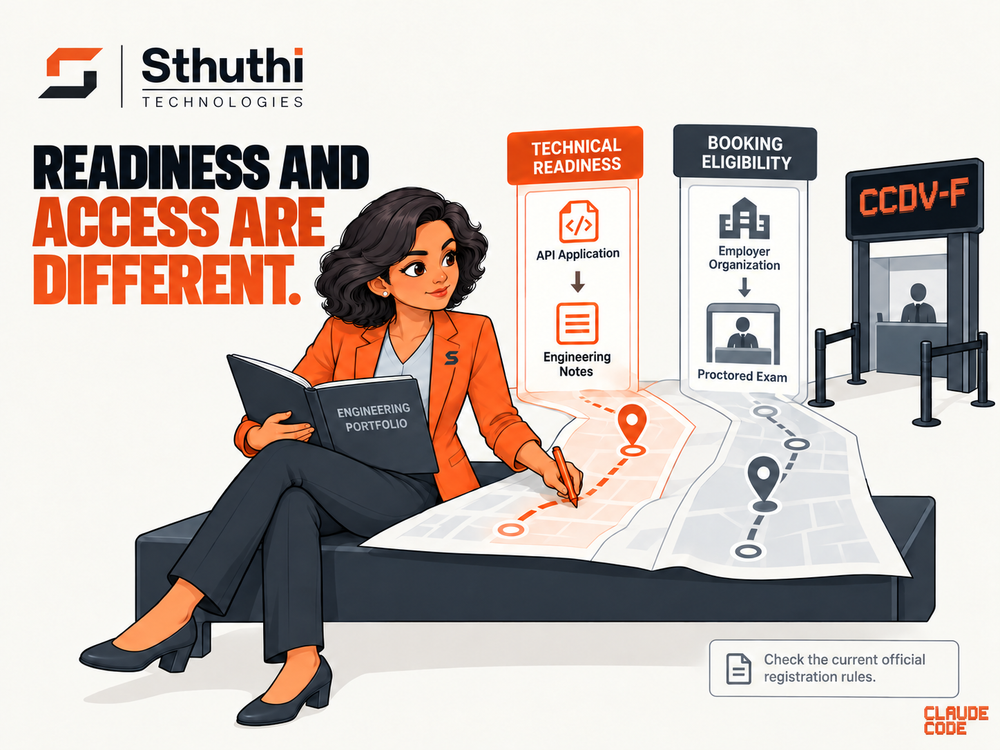
Two separate questions matter here: who the exam is designed for, and who is allowed to book it.
Who it's for. The guide describes technical professionals who build, integrate and ship production AI applications on Claude, mainly AI and machine-learning engineers, tech leads and senior software engineers. Its recommended experience is one to five years of software engineering, at least six months of hands-on work with Claude or a comparable LLM system, and proficiency in Python and/or TypeScript. It says plainly that the exam isn't meant for non-technical users or for roles limited to prompt writing.
Who can book it. Pearson VUE's Anthropic page states that certification is open to organisations in the Claude Partner Network, and registration runs through the Anthropic Partner Academy. If your employer isn't a partner, you currently can't book it yourself.
What the exam covers: the eight domains
The blueprint splits the exam into eight weighted domains. The weights show roughly what share of the scored items come from each one.
| Domain | Weight | What it covers |
|---|---|---|
| Applications and Integration | 33.1% | Claude API mechanics, application design, software engineering foundations, configuration (including CLAUDE.md and settings.json) |
| Model Selection and Optimization | 16.8% | LLM fundamentals, model trade-offs, cost and token management |
| Agents and Workflows | 14.7% | Agent architecture, the Claude Agent SDK, agent patterns and frameworks |
| Prompt and Context Engineering | 11.0% | Prompting, context management, output handling |
| Tools and MCPs | 10.6% | Tool implementation, MCP server development, choosing tools vs Skills vs MCPs |
| Security and Safety | 8.1% | Prompt injection, guardrails, hooks, secrets and key management |
| Claude Code | 3.1% | Core components, slash commands, headless mode, the CLAUDE.md hierarchy, settings.json |
| Eval, Testing, and Debugging | 2.6% | Error handling, trace analysis, isolating failures |
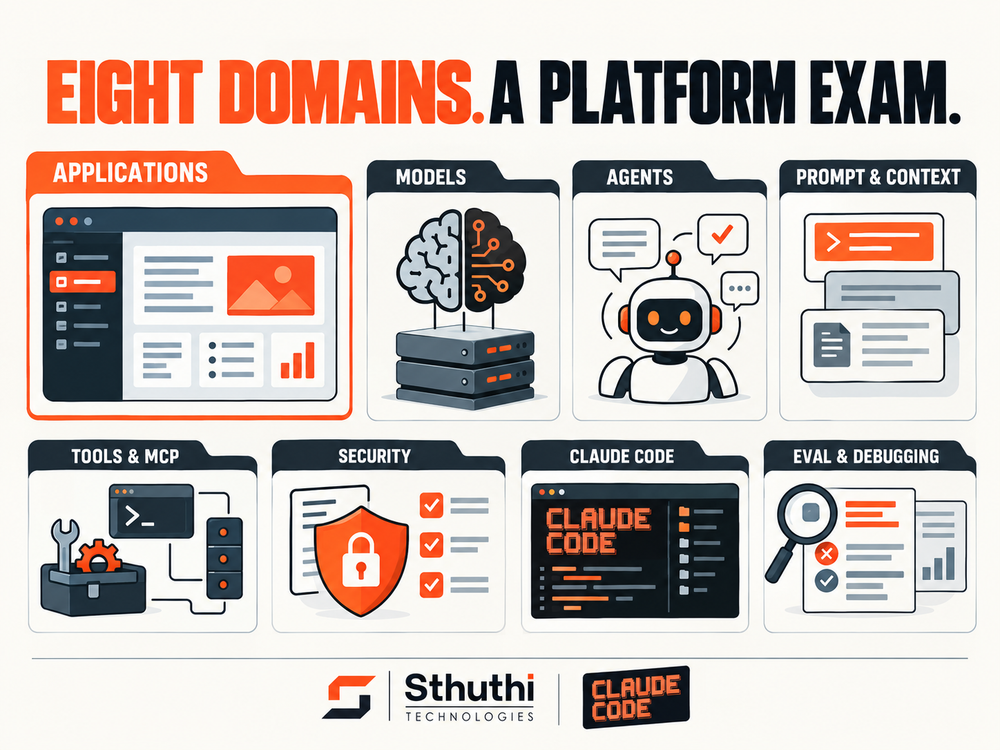
The biggest single domain, Applications and Integration at 33.1%, is about building on the Claude API. Together with Model Selection and Agents, more than 60% of the exam is about designing and integrating Claude applications.
How much does CCDV-F cost?
The fee is $125 per attempt, and the fee applies to every retake. The guide also notes that the price shown at checkout reflects any discount for your partner tier. A few other costs are worth planning for:
- Retakes. After a failed attempt you wait 14 days, then 30 days after a second, then 90 days after a third. You can sit the same exam up to four times in a rolling 12 months.
- Missed appointments. Cancelling or rescheduling within 24 hours of the appointment, or not showing up, forfeits the fee.
- Renewal. Renewing on time is free, using a non-proctored assessment on the Anthropic Partner Academy. If the credential lapses, you retake the full exam at the full fee.
How to prepare for the Claude Certified Developer exam
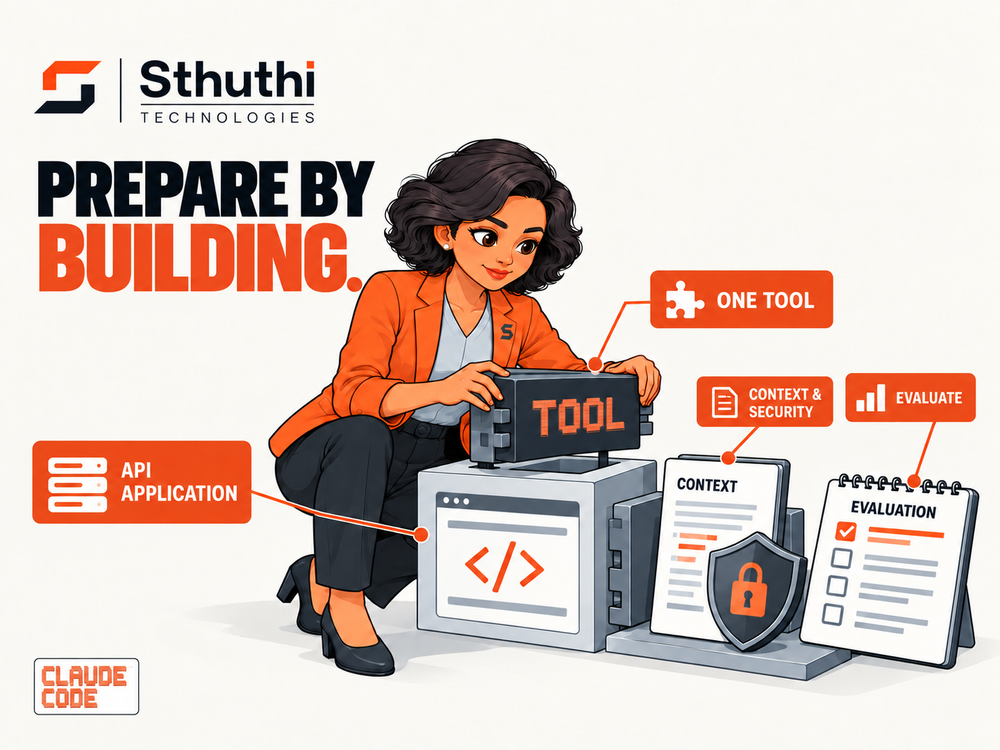
Anthropic says there's no single required course and that no resource guarantees a pass. Its guide recommends studying the blueprint and self-assessing against each objective, reading the official documentation for the API, models, prompt engineering, Claude Code, Skills and MCP, and building and running at least one Claude application that uses the API, at least one tool, basic prompt and context engineering, and simple security and evaluation practices.
Partners also have a free CCDV-F prep course on the Partner Academy, with five modules and about 774 minutes of content. It recommends completing nine foundational courses first, including Claude 101, Claude Code 101 and Claude Platform 101.
What CCDV-F doesn't test
This is the part most exam guides skip. CCDV-F is a good test of whether someone understands how to build on the Claude platform. It's a weaker test of how a person works with Claude Code day to day.
- Claude Code is a small slice. The Claude Code domain is 3.1% of the exam. Related topics appear elsewhere too, such as CLAUDE.md and settings.json under Configuration Management (4.1%) and hooks under Security (1.0%), but most of the exam is about the API, models and agents.
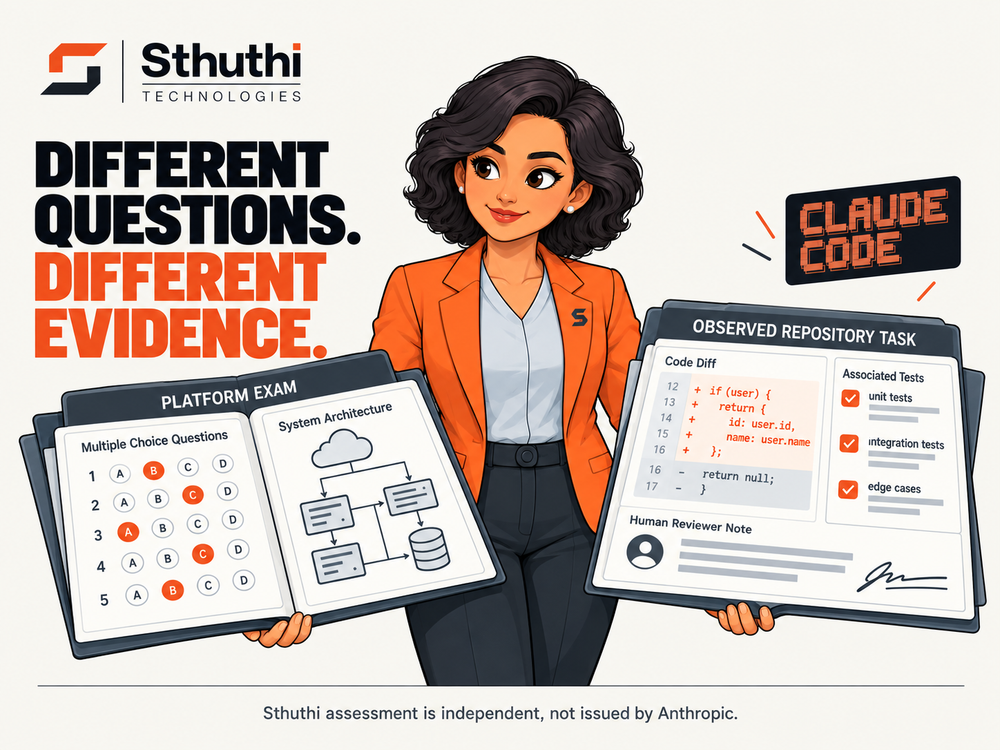
- It's a question-based exam. Multiple-choice and multiple-response items can check that someone knows the right answer. They can't show how that person scopes a real task, reads an agent's diff for scope creep or new dependencies, or decides when to stop the agent and take over.
- It isn't about your codebase. The exam is the same for everyone, so it says nothing about how an engineer works inside your repositories, with your permissions and review rules.
None of that is a flaw in the exam. Anthropic designed it to validate Claude developers broadly, and it does that. But if what you need to know is whether specific engineers use Claude Code safely in your own repositories, you need something that watches them do it. That's what our repository-based Claude Code assessment does: a proctored task in a live repository, reviewed by a human assessor. It's independent, it isn't issued by Anthropic, and it doesn't count toward partner tiers.
Weighing the Architect exam instead? See Claude Certified Architect: is it worth it for engineers?, or compare every Anthropic exam.
Is the Claude Certified Developer exam worth it?
It's a strong choice if:
- You work at a Claude Partner Network organisation and build Claude applications or agents.
- Your firm needs certified staff for Anthropic's partner tiers, since only Anthropic's certifications count.
- You want an official, broad credential that covers the API, agents, MCP and model selection.
It's a poor fit if:
- Your employer isn't a partner, because you can't register.
- You mainly use Claude Code to write and review code, and want proof of that specific skill.
- You need evidence of how people work in your own repositories.
For a side-by-side view of every option, see Sthuthi vs Anthropic's Claude certification and all Claude Code certification alternatives. For the wider picture, read is there a Claude Code certification?
Sources: Claude Certified Developer – Foundations Exam Guide, version 1.0 (Anthropic, July 2026); Claude Certification Program (Pearson VUE); CCDV-F prep course (Anthropic Partner Academy). Checked 6 October 2026.
Frequently asked questions
How many questions are on the Claude Certified Developer exam?
53 multiple-choice and multiple-response items, with a 120-minute time limit, according to Anthropic's CCDV-F exam guide (version 1.0, July 2026).
What is the passing score for CCDV-F?
A scaled score of 720 on a 100–1,000 scale. The result is reported as pass or fail, with a percent-correct breakdown by domain.
Can an individual take the Claude Certified Developer exam?
Not on their own at the moment. Pearson VUE states that certification is open to organisations in the Claude Partner Network, and registration runs through the Anthropic Partner Academy.
How long is the Claude Certified Developer credential valid?
12 months. On-time renewal is free through a non-proctored assessment on the Anthropic Partner Academy; if it lapses you retake the full exam at the full fee.
How much of CCDV-F is about Claude Code?
The Claude Code domain is 3.1% of the exam. Related topics also appear under Configuration Management (CLAUDE.md, settings.json) and Security (hooks), but most of the exam covers the Claude API, models and agents.
Want your team's AI-tool usage actually checked?
See the published certification tracks, or tell us about the tool you're worried about.